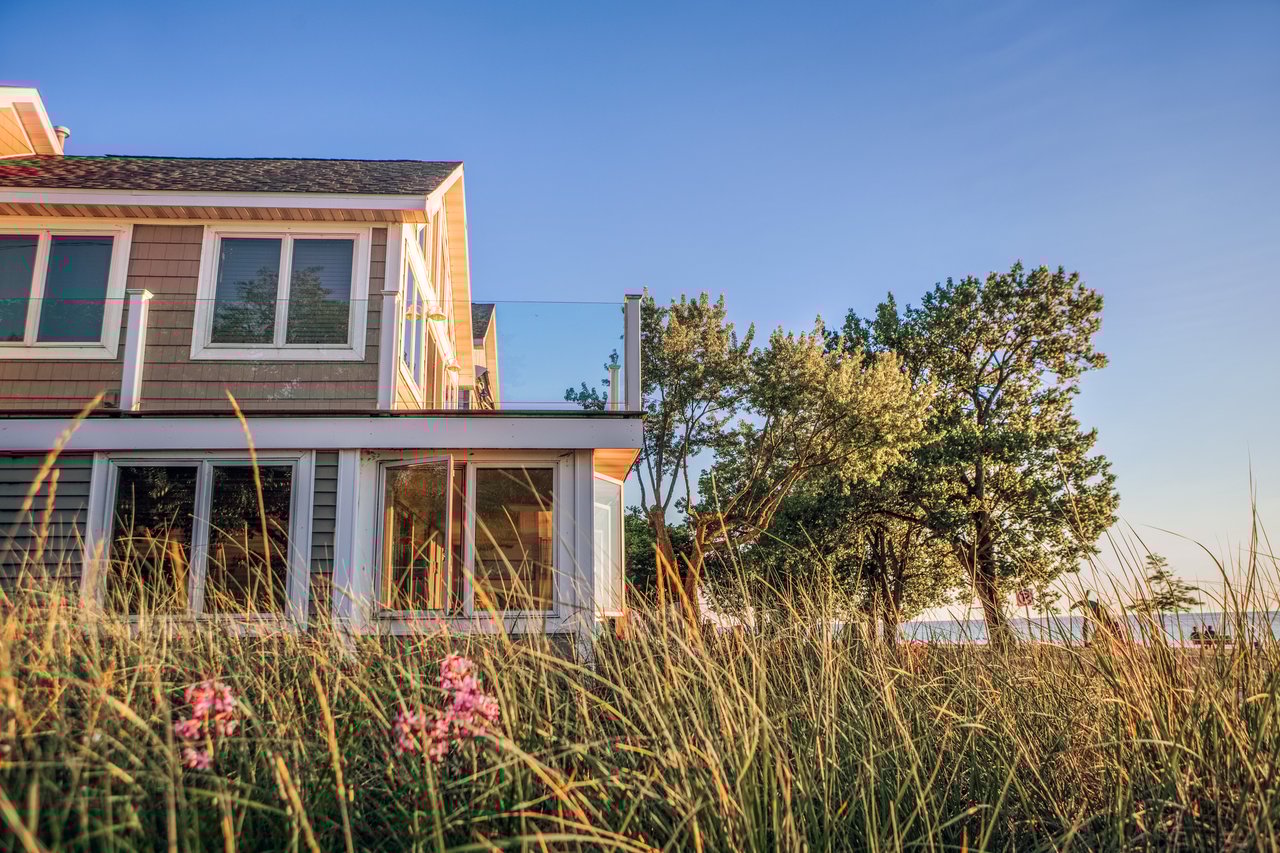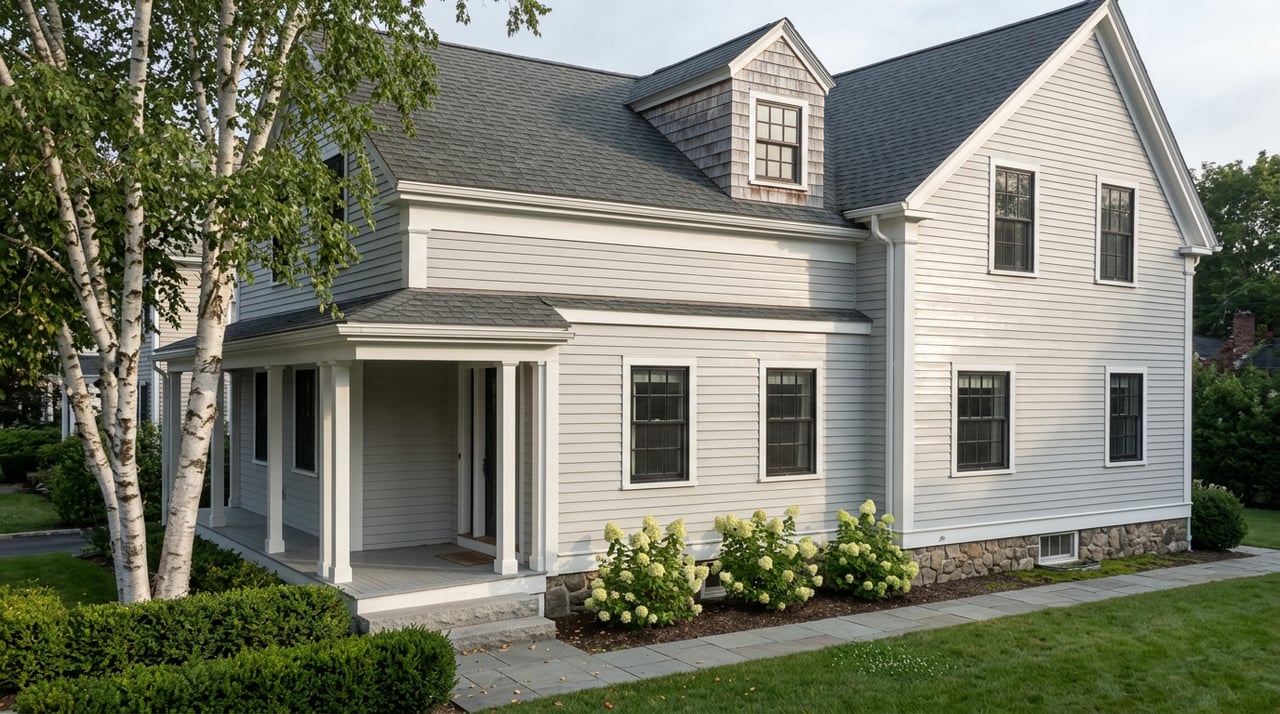
Two nearly identical houses sit across the street from each other on Munjoy Hill. Same vintage, same clapboard siding, same pitched roof. One owner wants to swap a rotting porch rail for something closer to the original design. The other wants to do the exact same thing.
One of them needs a Certificate of Appropriateness and possibly a hearing in front of a city board. The other doesn't. Neither owner did anything wrong. They just happen to live on opposite sides of a boundary that isn't marked on any sign, isn't visible from the sidewalk, and isn't something most buyers think to ask about before they close.
That boundary runs directly through Munjoy Hill, and understanding it matters more this fall than it has in years, because Portland just finished rewriting the rulebook that governs it.
The District Only Covers Half the Hill
When the Portland City Council voted 5-4 in April 2021 to create the Munjoy Hill Historic District, the designation didn't sweep across the entire neighborhood. It covers roughly 49 percent of the Hill. The rest continues to fall under the Munjoy Hill Conservation Overlay District, a lighter-touch zoning tool the city adopted back in 2018 that governs building scale and demolition review without the full design scrutiny that comes with historic designation.
Practically, this means a buyer comparing two listings a few blocks apart on Munjoy Hill could be looking at two different sets of rules for the same kind of project. A house inside the formal Historic District answers to the city's historic preservation standards for anything visible from the street. A house just outside that boundary, still on the Hill, still old, still charming, answers to a different and generally less restrictive set of standards.
If you're evaluating a Munjoy Hill property with renovation plans in mind, the first question worth asking isn't "is this house old." It's "which side of the line is it on." The Munjoy Hill Neighborhood Organization publishes maps showing the district boundary alongside the overlay area, and it's worth pulling up before you get attached to a floor plan.
What Actually Triggers a Review, and What Doesn't
The confusion around historic districts usually comes from an assumption that everything requires a hearing. That isn't how it works, on Munjoy Hill or in Portland's other eleven historic districts, which include the West End, India Street, Deering Street, Congress Street, and Stroudwater.
Ordinary maintenance doesn't require any review at all. If a building already has vinyl siding or vinyl windows, replacing them with vinyl again is allowed without design review, since the standards are built around preventing loss of historic material rather than locking a building into whatever it happens to be made of today. Review only kicks in for exterior changes visible from the street or a public way, and only when those changes go beyond upkeep.
Where a project lands from there depends on scope:
| Type of work | Review required | Who handles it | Rough timeline |
|---|---|---|---|
| Like-for-like repairs, routine upkeep | None | N/A | Standard permit only |
| Vinyl-to-vinyl siding or window replacement | No design review | N/A | Standard building permit |
| Visible change that clearly meets design guidelines (window swap, porch repair) | Administrative | Historic Preservation staff | A few business days once the application is complete |
| Larger or ambiguous exterior change, additions, new construction | Board-level | Historic Preservation Board, after public notice | Tied to the board's posted filing deadlines and meeting schedule, typically weeks |
That last row is where buyers most often get surprised. A project that seems modest on paper, like enlarging a dormer or adding a rear addition, can get bumped to the Board if staff determines it doesn't clearly meet the written guidelines. That triggers public notice and a spot on a meeting agenda, which means your renovation timeline is now tied to someone else's calendar.
The Rulebook Just Changed for the First Time in Over Thirty Years
Here's the part that makes this worth writing about now rather than two years ago. The standards used to interpret all of this sat largely untouched since the city adopted its original Historic Resources Design Manual in 1990 and gave it a minor update in 1992. On March 4, 2026, Portland's Historic Preservation Board adopted a comprehensive rewrite, the first of its kind in over three decades.
The board that adopted it, chaired by Brad Miller with Valerie Paquin-Gould as vice chair and Hilary Bassett among its members, spent months on public comment before finalizing the document. The city's Historic Preservation Program Manager, Evan R. Schueckler, staffed the process. The comment period on the draft closed January 31, 2026, and the final version was adopted a little over a month later.
If your renovation plan predates March, don't assume the guidance you read then still applies exactly as written. If you're touring a historic district property this fall with plans to alter it, ask your contractor or the seller's team whether anyone has checked the current manual, not an older PDF someone bookmarked years ago.
When Board Approval Isn't the Final Word
There's a temptation to treat Historic Preservation Board sign-off as the finish line. A pending case on Munjoy Hill shows why that isn't always true.
In May 2024, the Board approved a 30-unit apartment project at 42 Atlantic Street. The project was sized to align with LD 2003, the 2022 state law that increased allowed housing density statewide, and its developer has said no special entitlements were sought beyond what the law already permits. Despite the approval, a Cumberland County Superior Court justice was, as of a January 2026 Portland Press Herald report, still reviewing whether the Board's decision properly accounted for the historic character of the surrounding neighborhood. A similar dispute has surfaced on nearby Willis Street.
Neither case is about a homeowner replacing a porch rail. Both involve larger, multi-unit projects, and both illustrate that historic district approval can still draw a legal challenge from neighbors who disagree with how the board weighed compatibility against the state's push for more housing. If your plans on Munjoy Hill or in another historic district are ambitious enough to require Board review, it's worth building in some cushion for the possibility that approval doesn't end the conversation.
Does Any of This Actually Move the Price
Buyers often assume historic designation adds a premium, or that it scares off buyers and suppresses one. The city commissioned an independent study to answer that question directly. The consulting firm Jon Stover & Associates found that historic housing stock in Portland does carry a price premium compared to non-historic stock generally, but that being inside a designated historic district doesn't significantly change what a comparable home sells or rents for. The same study found no indication that historic designation displaces residents.
That distinction matters for how you think about a purchase. The premium you're paying for a well-kept 19th century house on Munjoy Hill is coming from the house itself, its bones, its detailing, its scarcity, not from whether a boundary line happens to run in front of it. Roughly one in four Portland residents already live inside a historic district, and nearly 2,000 buildings across the city carry that designation, so this isn't a fringe consideration. It's baked into how a meaningful share of the peninsula's housing stock actually works.
A Few Direct Questions
Does my property tax bill change if my house is inside a historic district? The city's own tax assessor has confirmed that historic designation is not a factor in property valuation and has no separate impact on property taxes.
What's the difference between a "landmark" and a "contributing" structure? Both classifications allow additions, reconstruction, and rehabilitation, and both require review for changes beyond ordinary maintenance. Outright demolition of either is restricted unless the owner can show no economical use remains for the property or pursues reclassification.
If I'm planning a renovation, when should I loop in the city? Before you finalize drawings. Historic Preservation staff will meet with applicants to review preliminary plans against the standards and flag early whether a project is likely to stay at the staff level or need a Board hearing, which can save weeks later.
Does this apply the same way in the West End as it does on Munjoy Hill? The review standards are the same citywide standards now detailed in the updated Design Manual. What differs by district is boundary and building inventory, not the underlying process.
If you're weighing a purchase on Munjoy Hill, in the West End, or anywhere else on Portland's peninsula where a renovation is part of the plan, it's worth having someone in your corner who can read a historic district map as easily as a listing sheet. Bedard Homes & Realty pairs brokerage guidance with an in-house builder who has sat across the table from these review processes before. Request a consultation and we'll help you figure out which side of the line you're actually on before you write an offer.